Hip Replacement Surgery Abroad: A Plain-Language Guide to the Terms You Will Meet
 Introduction
Your doctor says "arthroplasty." A hospital sends an "all-inclusive package." A form asks for "informed consent." If these words feel confusing, you are not alone.When you research hip replacement surgery abroad, you meet a lot of new language. Medical terms, cost terms, and travel terms all show up at once. Not understanding them can lead to wrong guesses. This guide explains the most common words in plain English. Use it as a reference while you read reports, compare quotes, and talk with doctors. Knowing the words will not replace medical advice, but it can make every conversation easier.
What Is Hip Replacement Surgery?
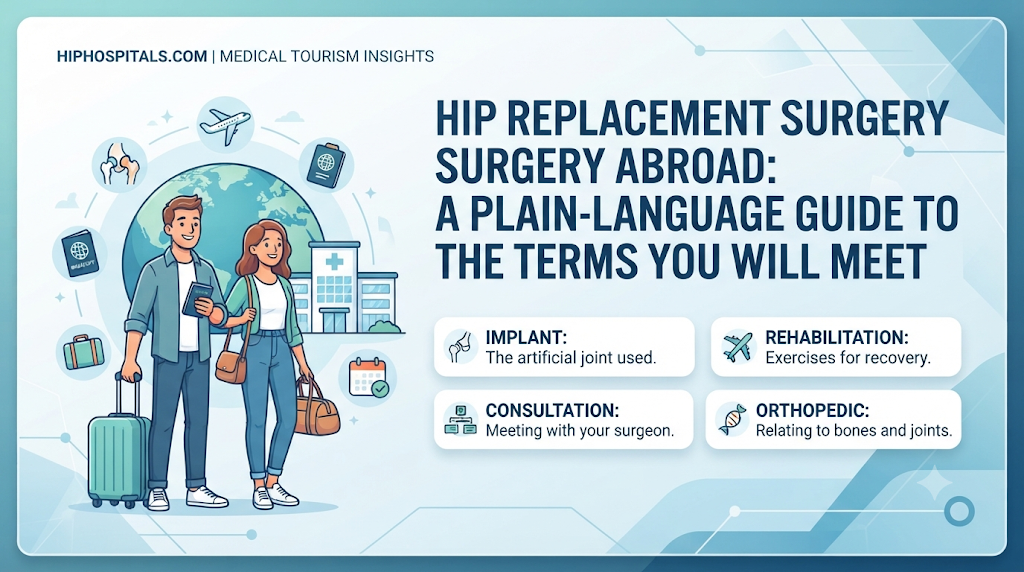
Hip pain is common, and it has many causes. Sometimes the smooth lining inside the hip joint wears away. Then the bones can rub together and movement may hurt.Total hip replacement surgery removes the damaged parts of the joint. The surgeon then places an implant, which is an artificial joint. The goal is to reduce pain and help you move better.Surgery is one option among several. Medicine, exercise, and physiotherapy help some people. An orthopedic surgeon, a doctor who treats bones and joints, can explain which choice may suit you.
Why Do Words Matter?
Words carry meaning, and small differences can change the story.
- Understanding: You can follow what your doctor says.
- Comparing: You can tell when two quotes use the same term differently.
- Consent: You can agree to treatment knowing what it means.
- Cost: You can see what a price includes.
- Safety: You can spot when something is unclear and ask.
Plain language helps everyone stay on the same page.
The Terms You Will Meet
Medical Terms
Arthritis means swelling and wear in a joint, which can cause pain and stiffness. Cartilage is the smooth tissue that covers the ends of bones in a joint. Implant means the artificial parts placed during surgery. Anesthesia is the medicine that prevents pain during an operation. Rehabilitation means exercises and therapy that help you regain movement after surgery. A physiotherapist is a specialist who guides those exercises.If you hear a word you do not know, ask the doctor to explain it in simple terms.
Terms About Hospitals and Surgeons
Instead of trusting a list of the best hospitals for hip replacement, learn what the hospital words mean. Accreditation means an outside group has reviewed a hospital against set standards. It is not the same as a ranking or a review. Infection control describes the steps a hospital takes to keep patients safe from germs. International patient services may include help with language, travel papers, and airport pickup.For hip replacement surgeons, look at training, which means their medical education, and experience, which means how often they perform this surgery. Ask them to explain both.
Terms About Cost
The hip replacement surgery cost can depend on the hospital, surgeon fees, implant type, tests, hospital days, medicines, and rehabilitation. Travel and stay add more. Here are the words you will see on paper.An estimate is a rough guess of cost. A quote is a more detailed price offer. Ask whether it is final or may change. Itemized means each charge is listed separately, so you can see what you are paying for. Inclusions are the things a price covers, and exclusions are the things it does not. Package is a general word. It can mean different things at different hospitals, so ask for the full list.You may also see charts of hip replacement cost by country. Treat them as rough guides. They may not show what is included. Affordable hip replacement surgery should mean fair value for the whole plan, not just a low number.
Terms About Travel and Planning
Medical tourism means travelling to another place for treatment. In medical tourism for hip replacement, the steps usually include sharing records, getting a treatment plan, planning travel, having surgery, recovering, and following up at home. There is no single best country for hip replacement surgery. The right choice depends on your health, language, distance, and support.A medical tourism company may help with hospital search, doctor contact, quotes, hotels, airport pickup, and paperwork. Some platforms, such as HipHospitals.com, describe support of this kind. Services differ, so ask what is included. A medical visa is a special type of entry permission that some countries offer. Rules vary, so check official government sources.
Terms in Your Paperwork
A treatment plan explains what surgery is suggested and what care follows. Informed consent means you agree to treatment after the risks and options have been explained to you. A discharge summary is a report from the hospital about your stay and care. Keep it. Your home doctor may need it. Follow-up means check-ups after surgery to see how you are healing.
Factors Patients Should Consider
- Ask early: Do not wait until you are confused.
- Write it down: Keep a list of new words and their meanings.
- Check for consistency: See if each hospital uses terms the same way.
- Get definitions in writing: Especially for cost words.
- Bring the list to appointments: It helps you ask better questions.
- Involve family: A second person can catch things you missed.
Quick Reference Table
| Term | Simple Meaning |
|---|---|
| Implant | The artificial joint placed during surgery |
| Anesthesia | Medicine that prevents pain during surgery |
| Rehabilitation | Therapy to regain movement |
| Accreditation | An outside review of a hospital's standards |
| Estimate | A rough guess of cost |
| Quote | A more detailed price offer |
| Itemized | Each charge listed separately |
| Informed consent | Your agreement after risks are explained |
| Discharge summary | A hospital report about your stay |
| Follow-up | Check-ups after surgery |
How to Learn the Language: 5 Steps
Step 1: Ask Your Own Doctor to Explain
Start with the doctor who knows you. Ask them to explain any words in your reports.
Step 2: Keep a Simple Word List
Write each new term and its meaning in your own words.
Step 3: Ask Hospitals to Define Unclear Terms
When a quote or plan uses a word you do not know, ask for a short written explanation.
Step 4: Check That Terms Match Across Quotes
Make sure "included" and "package" mean the same thing in every offer you compare.
Step 5: Bring Your List to Follow-Up
Take your list to check-ups. Ask again about anything that still feels unclear.
Common Mistakes to Avoid
Nodding Along
Do not pretend to understand. Ask for a simpler explanation.
Assuming Words Mean the Same Everywhere
"Package" and "included" can differ from one hospital to another.
Mixing Up an Estimate and a Quote
An estimate may change. Ask if a quote is final.
Confusing Accreditation With Ranking
Accreditation is a standards review. It is not a list of winners.
Skipping Questions About "Package"
Ask for the exact items covered.
Using Forum Terms as a Diagnosis
Words you read online cannot replace a doctor's assessment.
Real-Life Example
This story is used only to show the process.Lucia is 62 and is researching hip surgery abroad. Her doctor's letter uses words she does not know, and a hospital email mentions an "all-inclusive package."Lucia buys a small notebook. She writes each new word on the left and its meaning on the right. She asks her doctor to explain "arthritis" and "implant" in simple words. She then writes to two hospitals and asks what their package includes. One replies with an itemized list. The other sends a short line with no details.Lucia also asks what "follow-up" means at each hospital. She takes her notebook to a family meeting, and everyone can follow the discussion. With the words clear, she feels ready to compare the offers.
Phrases That Need a Follow-Up Question
| Phrase You May See | What to Ask |
|---|---|
| All-inclusive package | Which items are included, and which are not? |
| Estimated cost | Is this final, or can it change? |
| Experienced surgeon | How much hip surgery experience, and what training? |
| Accredited hospital | Accredited by whom, and how can I check? |
| International patient support | What help is offered, and is it free? |
| Standard implant | What type, and why is it suggested? |
| Follow-up included | What visits, and where? |
Frequently Asked Questions
1. What is the difference between an estimate and a quote?
An estimate is a rough guess. A quote is a more detailed offer. Always ask if the number can change.
2. What does "itemized" mean?
It means each charge is listed on its own line. This helps you see exactly what you are paying for.
3. What is informed consent?
It is your agreement to treatment after the doctor has explained the risks and options. Ask questions before you sign.
4. What does "accredited" mean?
It means an outside group has reviewed the hospital against set standards. Ask which group, and how you can check.
5. What is a discharge summary?
It is a report about your hospital stay and treatment. Keep it for your home doctor.
6. What is rehabilitation?
It is therapy and exercise that help you regain movement after surgery. A physiotherapist usually guides it.
7. What does "package" mean in a quote?
It can mean different things. Ask for a written list of what is included and what is not.
8. What is the difference between an orthopedic surgeon and a physiotherapist?
The surgeon treats bone and joint problems, including operating. The physiotherapist helps you regain strength and movement through exercise.
Conclusion
Clear words lead to clearer decisions. Start with medical suitability, then look at the hospital, the surgeon, and the treatment plan. Check the full cost, travel needs, recovery, and follow-up care. When a term is unclear, ask for a plain explanation in writing. Understanding the language helps you take part in your own care with confidence.
